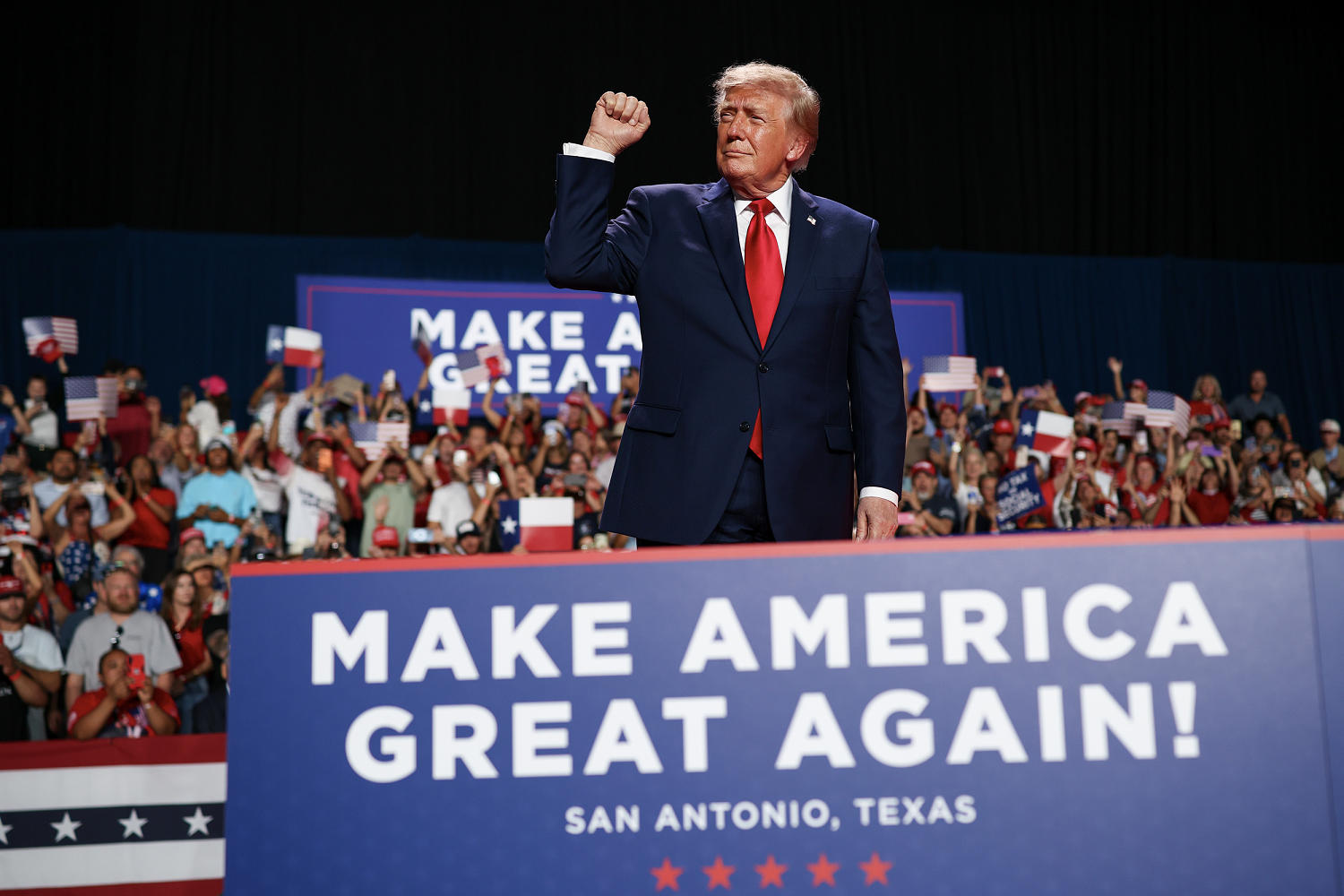
In a recent rally in San Antonio, Texas, President Donald Trump attempted to clarify controversial remarks he made earlier this week regarding Iran’s potential threat to American cities. His initial comments, which included a suggestion that Iran could “take out” Los Angeles or San Diego, were met with significant criticism, particularly from California’s Democratic leaders.
During his speech, Trump recast his earlier statements, asserting that if Iran were to launch a missile at U.S. cities, it would spark severe consequences. “You want to see problems? Let them hit a missile into San Diego or Los Angeles. You want to see a horror show?” he remarked. Despite the alarming tone, he insisted, “We’re not going to let that happen. We protect our cities. We protect our country.” This shift in rhetoric seemed aimed at reassuring his supporters while addressing the backlash from his previous comments.
California Governor Gavin Newsom was among those who condemned Trump’s initial remarks, labeling them as reckless and dangerous. Newsom accused the president of encouraging foreign adversaries to attack American cities, which raised concerns about the implications of Trump’s statements during a time of heightened geopolitical tensions.
Trump’s San Antonio rally was marked by his characteristic bravado, lasting nearly two hours and including interruptions from protesters. Notably, an incident drew attention when a protester was physically removed from the venue by an audience member.
As the night concluded, Trump announced he would award former MLB pitcher Rogers Clemens with the Presidential Medal of Freedom, emphasizing Clemens’ contributions to baseball while also addressing his past controversies. Clemens expressed his gratitude, stating receiving such an honor from Trump was unparalleled.
This series of events highlights the ongoing complexities of Trump’s relationship with his supporters and critics as he navigates the political landscape ahead of the upcoming midterm elections.
Photo credit: Win McNamee