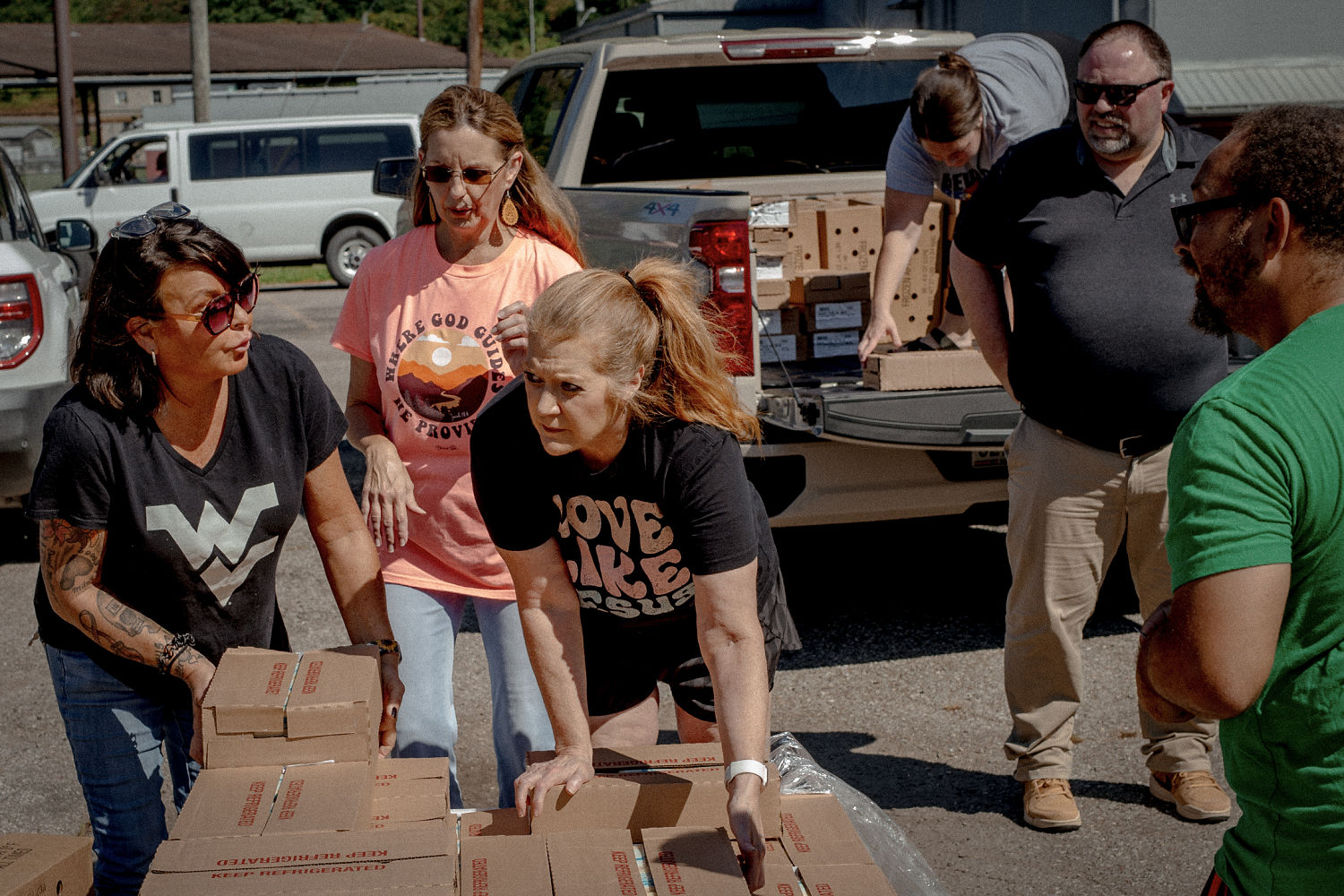
In the heart of West Virginia’s coal country, a stark reality unfolds as the community grapples with an escalating hunger crisis. Bill Likens, director of community outreach for the Cabwaylingo Presbyterian Chapel in Dunlow, finds himself at the forefront of this battle, witnessing a growing line of cars filled with families in need each week.
As daylight breaks, the line of vehicles stretches half a mile, with some families traveling over 30 miles just to reach the food pantry. The sweltering heat does little to deter them as they wait for hours, hoping to receive essential food supplies. With rising demand and dwindling resources, Likens faces an uphill battle in his mission to feed the community.
Once a lifeline for many, the pantry’s resources have been severely impacted by federal cutbacks, particularly following the Trump administration’s changes to food distribution programs. As demand skyrockets due to restrictions on food stamps and inflation-driven increases in living costs, the pantry is struggling to keep up. The U.S. Department of Agriculture (USDA) has reduced food supplies, leaving food banks like Facing Hunger Foodbank to find alternatives to meet the needs of the community.
Amidst this crisis, the challenges extend beyond Dunlow. An NBC News survey highlights a troubling trend: nearly three-quarters of the country’s largest food banks report a significant increase in clients, often from demographics that previously did not seek assistance. As food banks receive less from federal programs, they are left to navigate the complexities of hunger with limited resources.
In a landscape where families are increasingly reliant on food pantries, the experiences of individuals like Joanne Girvin and Bonnie Newsome illustrate the harsh economic realities. Both women, now retired, find themselves struggling to make ends meet as they grapple with rising prices and stagnant incomes. Their stories reflect a broader narrative of economic hardship, exacerbated by recent policy changes that have stripped many of their food assistance benefits.
Despite the challenges, local leaders like Likens and Donna Paterino, who runs another food pantry in Matewan, remain committed to their communities. Their ingenuity in sourcing food donations and providing essential meals reflects a deep-rooted spirit of neighborly support in an area that has seen better days. While they are grateful for private donations, they emphasize the need for sustained government support to ensure that the most vulnerable do not go hungry.
As the line of cars continues to grow, the need for a comprehensive solution to hunger in rural America becomes ever more pressing. Families are not only fighting for food; they are fighting for dignity and the basic right to nourishment in a land of plenty.
Photo credit: Mike Belleme for NBC News