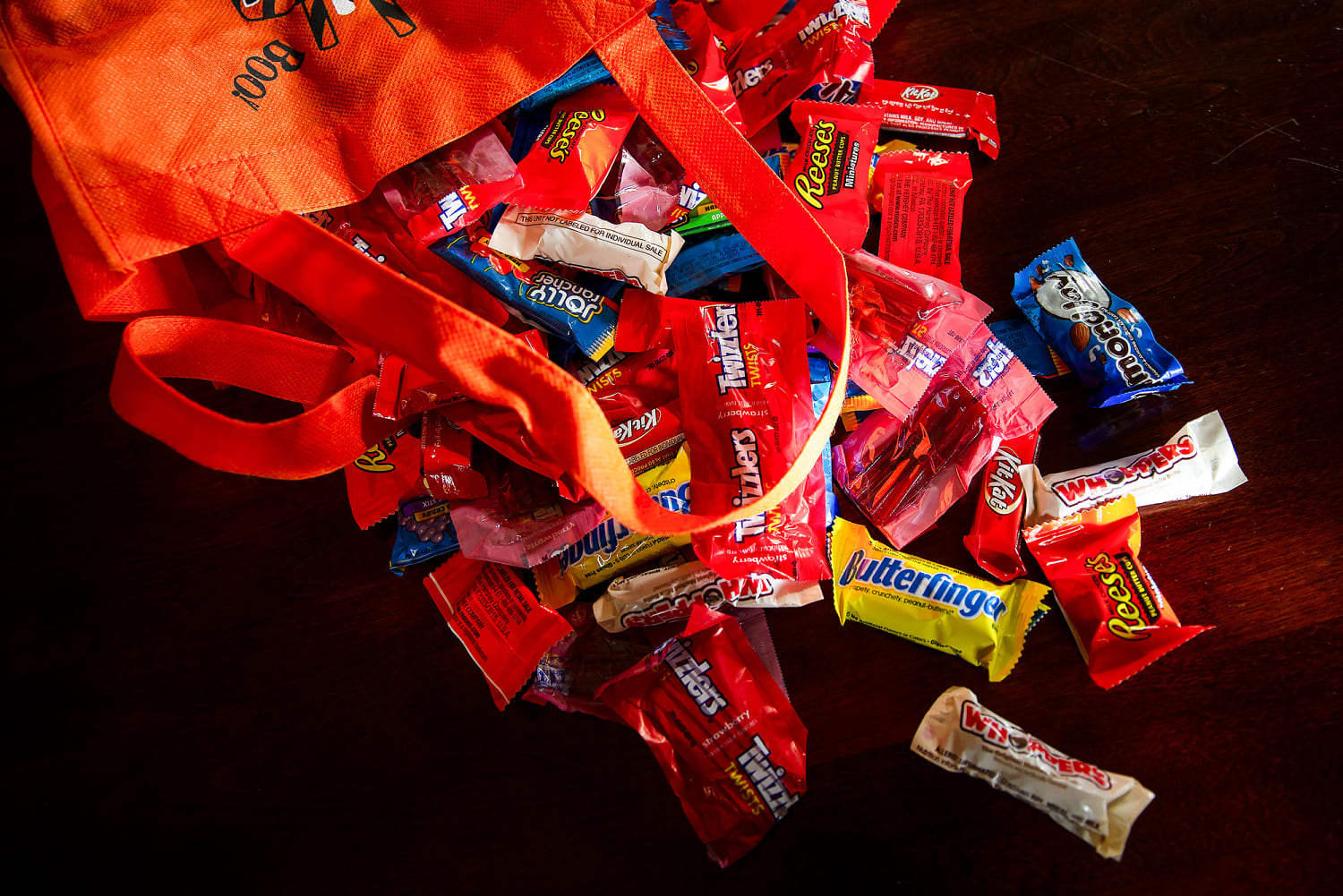
This Halloween, the economic landscape is perhaps the most chilling aspect for many families, with rising costs casting a shadow over festivities. Despite the increasing prices of everyday essentials, Americans are still determined to indulge in sweet treats, particularly Halloween candy.
The Bureau of Labor Statistics reports that the costs for chewing gum and candy have surged by 8.1% over the past year, while chocolate prices have jumped even higher, reflecting a staggering 9.4% increase overall. This surge in prices is attributed to various factors, including supply chain disruptions and adverse weather conditions affecting cocoa production in key regions like Côte d’Ivoire and Ghana.
Consumers like Lakisha Reardon, a legal assistant, are feeling the pinch. “I’m walking to save a little bit of money,” she shared, acknowledging her increased electric bills of around $150 a month. Yet, she remains steadfast in her commitment to Halloween traditions, stating, “One thing I won’t give up is Halloween candy.”
For many, the nostalgia tied to Halloween is worth the splurge, despite financial constraints. College student Abby Mynatt recalls the excitement of her childhood and is willing to spend around $50 on candy this year, even if it means adjusting her budget elsewhere. “Certain things, even just little pleasures, are still worth it,” she commented.
Interestingly, while nonchocolate candy prices have risen by 1.8% to an average of $3.31, the price of chocolate specifically associated with Halloween has seen a staggering increase of 15.5%. This reflects broader economic trends, where consumers are willing to prioritize small luxuries, like candy, as a way to cope with the economic gloom surrounding them.
Even as inflation looms, leading many to tighten their belts, the National Retail Federation projects that overall Halloween spending could reach $13.5 billion this season. A remarkable 96% of shoppers are expected to purchase candy, emphasizing the holiday’s significance despite rising costs.
As many navigate financial pressures, the pursuit of happiness through small indulgences remains a key theme. Consumers like Ari Monahan, who enjoys treating herself with little purchases, embody this trend. “If it makes me smile and I have a little money, I’ll pay for it,” she said, highlighting a collective sentiment that even in challenging times, finding joy in the little things—like Halloween candy—is invaluable.
Photo credit: Derek Davis