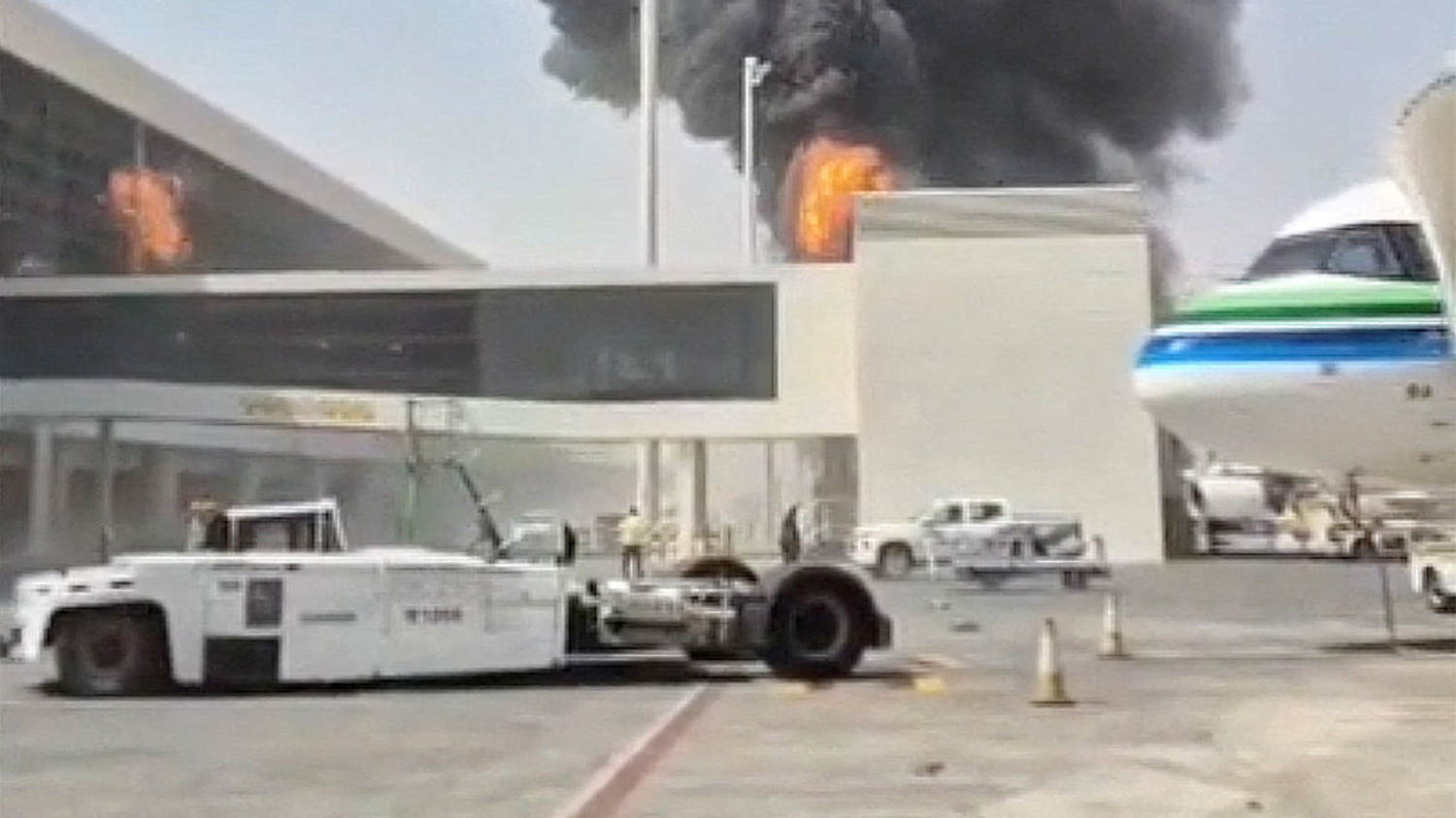
In a significant escalation of hostilities, Saudi Arabia is grappling with the aftermath of a deadly attack on its main international airport, attributed to the Iran-backed Houthi rebels from Yemen. The assault, which occurred over the weekend, resulted in the deaths of 13 individuals and left hundreds injured, marking one of the most severe strikes on the kingdom in over a decade.
The incident took place at Riyadh’s King Khalid International Airport, causing widespread panic as video footage revealed a crowded terminal moments before the explosion sent debris flying and travelers scrambling for safety. The airport has remained closed since the attack, as authorities assess the situation.
Among the casualties were not only Saudi citizens but also individuals from various nationalities, including an American, an Indian, and nationals from Bangladesh, Egypt, Jordan, Palestine, Syria, and Sudan. The Indian Embassy later confirmed the death of an Indian national who succumbed to injuries sustained in the attack.
Adam Baron, a fellow at New America, described the situation as a “strong escalation ladder,” indicating that the conflict is intensifying. More than 300 people were reported injured, reflecting the scale of the attack and its implications for regional stability.
The repercussions of this violence have been felt even at the ongoing WPC Energy Congress in Riyadh, which saw several top executives from energy companies like Exxon Mobil and Shell withdraw from scheduled appearances. Saudi Energy Minister Prince Abdulaziz bin Salman addressed attendees, affirming the country’s commitment to safety while acknowledging the persistent risks. He emphasized that the kingdom’s response to the escalating violence must be equally robust.
Saudi Arabia has been engaged in a military campaign against the Houthis since 2015, and tensions have resurfaced following a ceasefire in 2022 that had brought a temporary lull in violence. The recent attacks signal a potential shift in the conflict’s dynamics, as the Houthis advance their military operations along critical maritime routes.
With the U.S. weighing its response to the situation, President Donald Trump has indicated that military intervention is on the table as the administration assesses the implications of the Houthis’ renewed aggression. This attack could galvanize international actors to reconsider their strategies in the region as fears of further violence loom large.
The streets of Riyadh have seen a return to normalcy amid the chaos, with residents attempting to resume their daily lives despite the anxiety over potential future attacks. Observers warn that the precision of the Houthis’ strikes raises concerns about the safety of civilians and critical infrastructure in Saudi Arabia.
Photo credit: Social Media via REUTERS