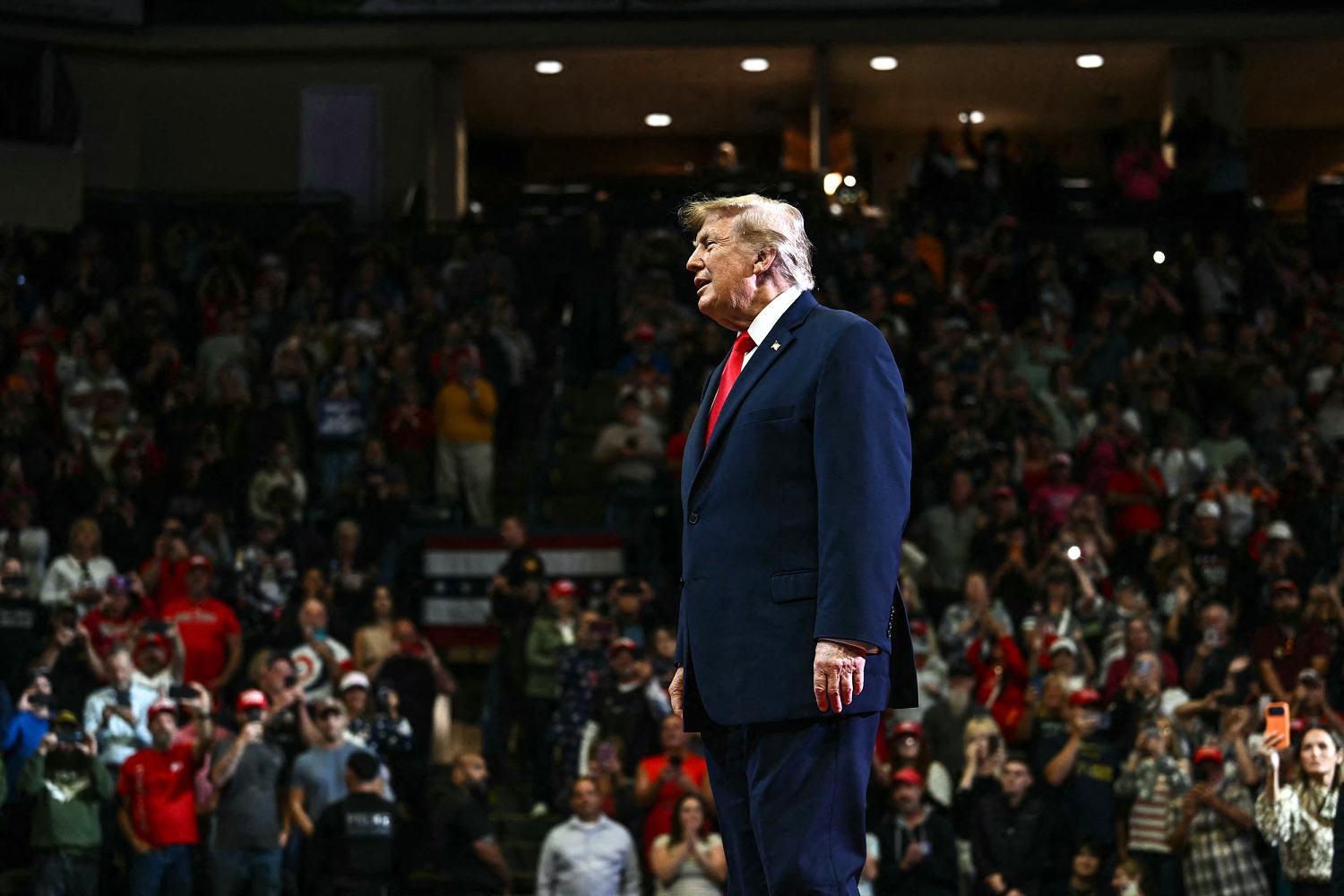
During a rally in Youngstown, Ohio, former President Donald Trump unleashed a series of attacks on Representative Ilhan Omar and Michigan Senate candidate Abdul El-Sayed, prompting the crowd to chant “deport” in response to his comments. This rally took place just hours after federal agents executed a search warrant at Omar’s home as part of an ongoing criminal investigation.
Trump labeled Omar a “disaster,” criticizing her background as an immigrant from Somalia, where he claimed there are “no laws” or “police.” He went on to assert that she should not lecture Americans about the Constitution, implying that her origins disqualified her from doing so. Trump’s remarks came amid rising tensions surrounding immigration and national identity, which have been focal points of his political rhetoric.
As Trump spoke, he linked Omar’s background to gang-related violence in Minnesota, referencing a recent thwarted shooting at the Mall of America, which he claimed was plotted by an American citizen of Somali descent. This narrative triggered further chants of “deport” from the audience.
Trump also targeted El-Sayed, describing him as a “jihadist” and suggesting that individuals like him “do not belong in America.” His comments were framed as part of a broader strategy to rally support among Republican voters in a region that has shifted political allegiances in recent years. Trump’s visit coincided with his campaign efforts for local Republican candidates, including Sen. Jon Husted and gubernatorial nominee Vivek Ramaswamy.
El-Sayed, who was born in Michigan to Egyptian immigrants, condemned Trump’s comments as attempts to distract voters from real issues affecting their lives, such as rising costs of living. He has previously criticized Trump for perpetuating fear around his ethnicity and faith, emphasizing that such tactics have no place in the political discourse.
As Trump continues to make headlines for his controversial statements, his rally in Ohio highlights the ongoing divisions within American politics, particularly regarding race, immigration, and the narratives used to mobilize voter bases ahead of the upcoming elections.
Photo credit: Kent Nishimura