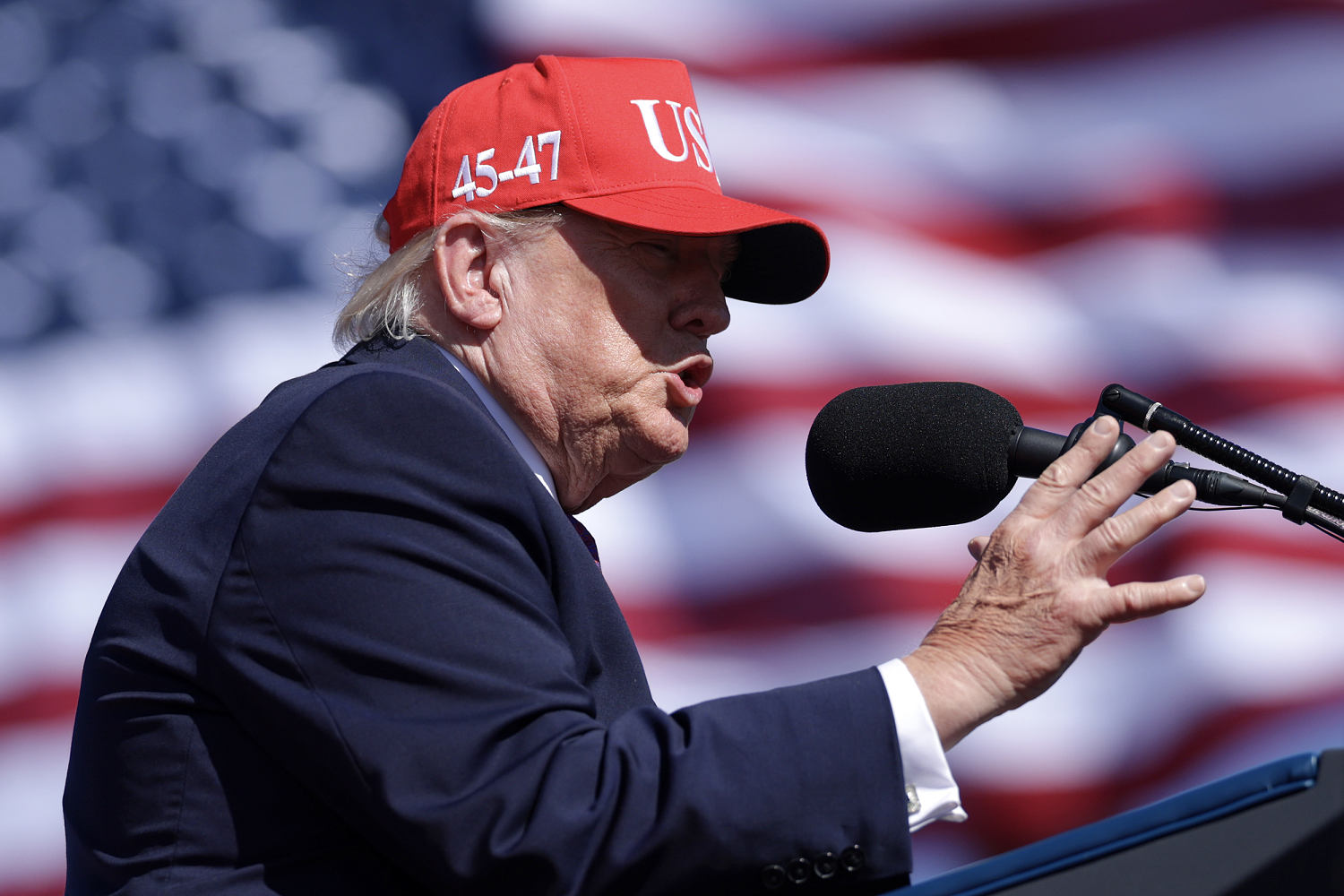
During a campaign rally in Bullhead City, Arizona, President Donald Trump sparked controversy with his remarks regarding government leaks, suggesting that individuals who disclose sensitive information to the media should face severe consequences. “Leakers should be, in my opinion, leakers should be shot,” Trump declared, emphasizing the potential dangers of such leaks in military operations.
Trump recounted an incident involving a planned operation against Iran, which he claims was compromised due to a leak about the timing and details of the mission. He specifically criticized a report that indicated the U.S. military’s departure time from Missouri, which he alleged appeared in major news outlets like The New York Times and CNN.
“Somebody leaked, some sleazebag,” Trump stated, calling for harsh penalties for those responsible for such disclosures. He went on to label leakers as “the scum of the Earth,” reflecting his ongoing struggle against what he perceives as an adversarial media landscape.
In a further attack on journalists, Trump suggested that those covering his rally were akin to leakers, accusing them of disseminating false information. “Those same people up there, they’re almost as bad as a leaker, because they leak,” he said, highlighting his contentious relationship with the press.
Since his return to office, Trump’s administration has taken steps to reduce leaks, including a proposal for federal employees to sign nondisclosure agreements. Reports have emerged of federal investigators subjecting military personnel to polygraph tests to ascertain whether classified information was shared with journalists.
In a notable action, Trump authorized a search of a journalist’s home amid an investigation into a contractor accused of mishandling classified materials, although a court ruled against the administration’s efforts to examine the seized data. The administration has also sought to compel testimony from journalists in grand jury proceedings, only to later withdraw the subpoenas following public backlash.
Photo credit: Alex Wong