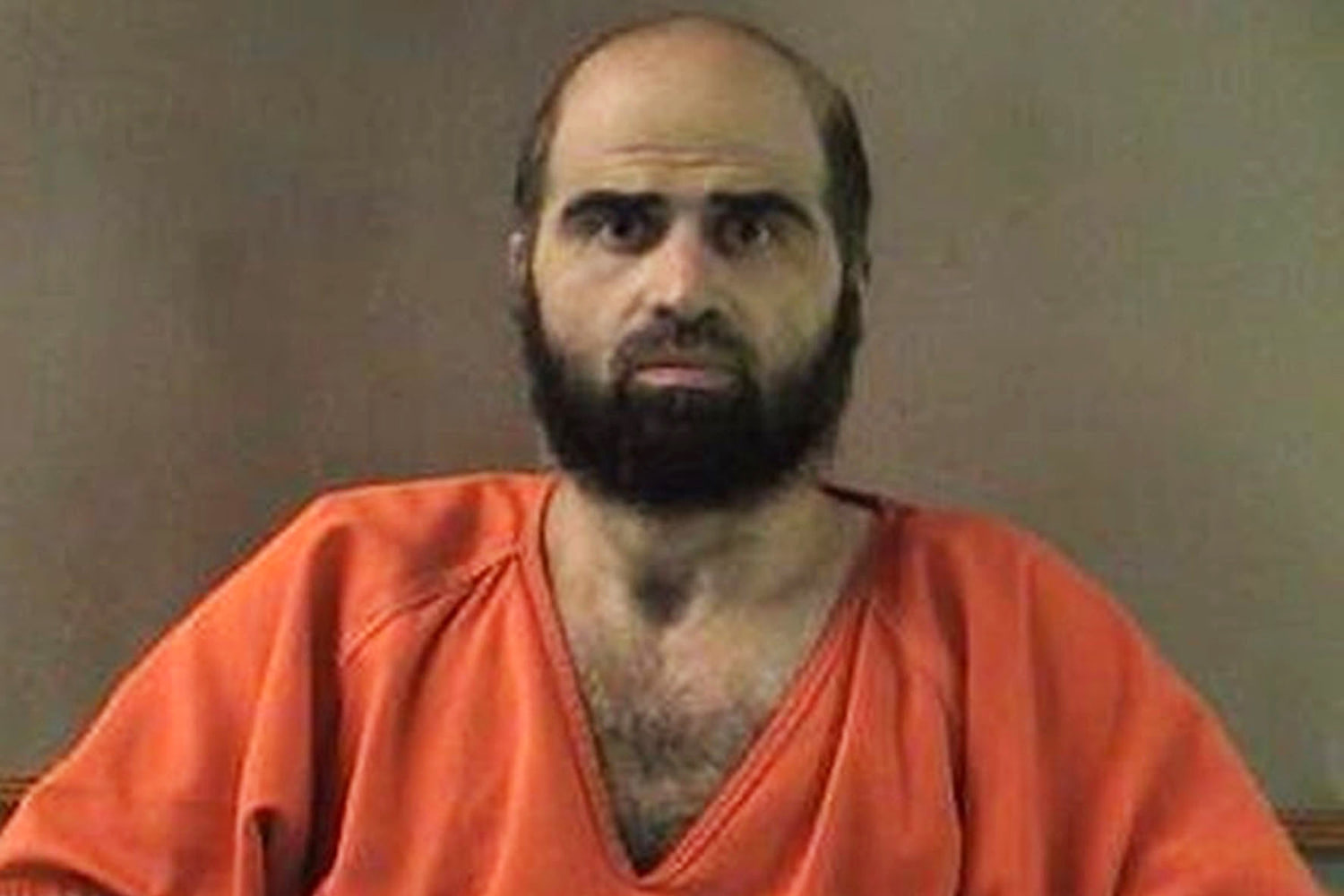
In a significant policy reversal, President Donald Trump announced that the upcoming execution of Nidal Hasan, the Fort Hood shooter, will not be livestreamed. This decision came after Defense Secretary Pete Hegseth’s declaration last week that the execution would be publicly broadcasted, a move that drew criticism from various political figures and commentators.
Trump expressed his concerns in a post on Truth Social, stating that while the execution might serve as a deterrent against terrorism, many citizens would prefer not to witness it through any visual medium. “He will die, as scheduled, by firing squad, but this event will not be streamed,” the President confirmed, emphasizing that the families of Hasan’s victims would have the opportunity to attend the execution in person, which is scheduled for December 3.
The backlash against the proposed livestream intensified following Hegseth’s comments, with critics warning that it could inadvertently glorify Hasan’s actions and reinforce his martyrdom complex. Vice President JD Vance had also indicated skepticism about the livestream plan, suggesting that it might not come to fruition. Trump highlighted that he would ultimately make the final decision on the matter, balancing military recommendations with public sentiment.
Concerns about the potential implications of broadcasting the execution were echoed by Speaker of the House Mike Johnson, who noted that such footage could be exploited by future terrorists as a recruitment tool. Johnson remarked, “We’ve got to think through the policy implications of all that,” reflecting a broader unease among lawmakers regarding the execution’s public nature.
Hasan, who was sentenced to death in 2013 for the 2009 attack that killed 13 people at Fort Hood, will face execution by firing squad, marking a rare instance of military capital punishment. The last military execution was conducted in 1961, and the last firing squad execution was in 1945.
Photo credit: Bell County Sheriff's Dept.