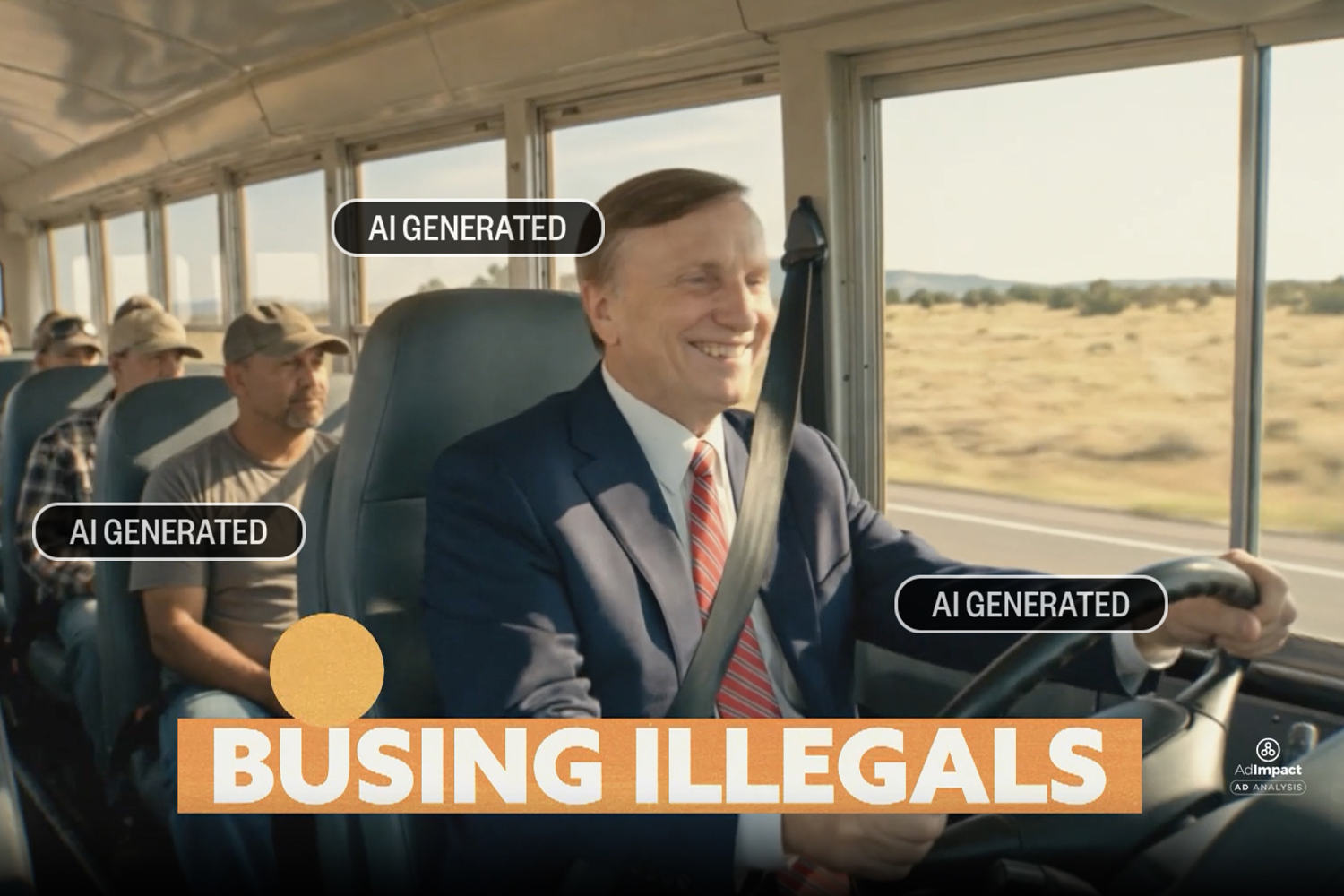
In an unprecedented move, political campaigns are increasingly utilizing artificial intelligence to create and enhance advertisements, a trend that has sparked concern among voters and experts alike. As the midterm elections approach, over 220 ads, primarily from Republican candidates, have been identified as either AI-generated or enhanced, accumulating nearly $137 million in expenditure.
One notable example is South Carolina’s Lt. Gov. Pamela Evette, who found herself at the center of controversy after an AI-generated political ad portrayed her undergoing a dramatic lie detector test. Despite the ad being labeled as a dramatization, many voters questioned its authenticity during her campaign, leading Evette to clarify that the incident was entirely fabricated.
Evette’s experience highlights a growing trend where political ads are blurring the lines between reality and fabrication. “People were genuinely confused about what was real,” she recounted, emphasizing the need for public awareness regarding the deceptive potential of such technology. This sentiment is echoed by experts like Travis Ridout from the Wesleyan Media Project, who noted that the surge in AI-generated ads marks a significant increase from previous election cycles.
According to Ridout, the recent election cycle has seen a staggering increase in AI spending compared to previous years, with a notable emphasis on primary races where candidates are eager to distinguish themselves. While the tactic has proven effective for some, it raises critical ethical questions about transparency and the potential for misinformation.
The rapid adoption of AI tools in political advertising is not without its challenges. With only 27% of the AI-generated ads disclosing their use of such technology, the risk of misleading voters is significant. As candidates leverage AI to enhance their messaging, the absence of federal regulations leaves much of the responsibility to state laws, which vary widely across the country.
As the political landscape evolves, so too does the potential for AI to reshape campaigning strategies. Candidates with limited resources are finding new ways to compete, suggesting that this trend is likely to persist. However, the implications for democratic processes are profound, as voters may increasingly struggle to discern fact from fabrication.
Both Evette and Fleming, another candidate affected by AI-generated content, agree that safeguards are essential to maintain the integrity of electoral processes. The call for transparency and ethical standards in the use of AI in political advertising is more urgent than ever, as voters navigate an increasingly complex and digitally manipulated campaign environment.
As the 2026 elections draw closer, the debate surrounding the use of AI in political ads will likely intensify, prompting questions about the future of advertising ethics and voter trust in the democratic process.
Photo credit: Accountability Project via AdImpact