In response to ongoing civil unrest, the city of Paris has taken significant measures, including the closure of major museums like the Louvre and Orsay, as local authorities brace for a new wave of protests against rising living costs and educational funding issues. Demonstrators, comprised mainly of students and workers, are rallying in various cities, including Lyon and Marseille, as tensions rise over government policies.
On Saturday, thousands took to the streets in Paris, with police deploying heavy security measures, including tear gas in Lyon where a march was prohibited. The protests, initially sparked by demands for improved school conditions, have escalated into a broader movement criticizing President Emmanuel Macron’s government over economic hardships faced by the public.
Trade unions have voiced their frustration over the government’s decision to limit protest routes, asserting that these actions infringe on the right to free expression. “They are using what happened last week as an excuse to quiet protesters,” said Soumaya Abed, a seasoned activist. Despite the restrictions, many remain resolute in their demands for better educational resources and living conditions.
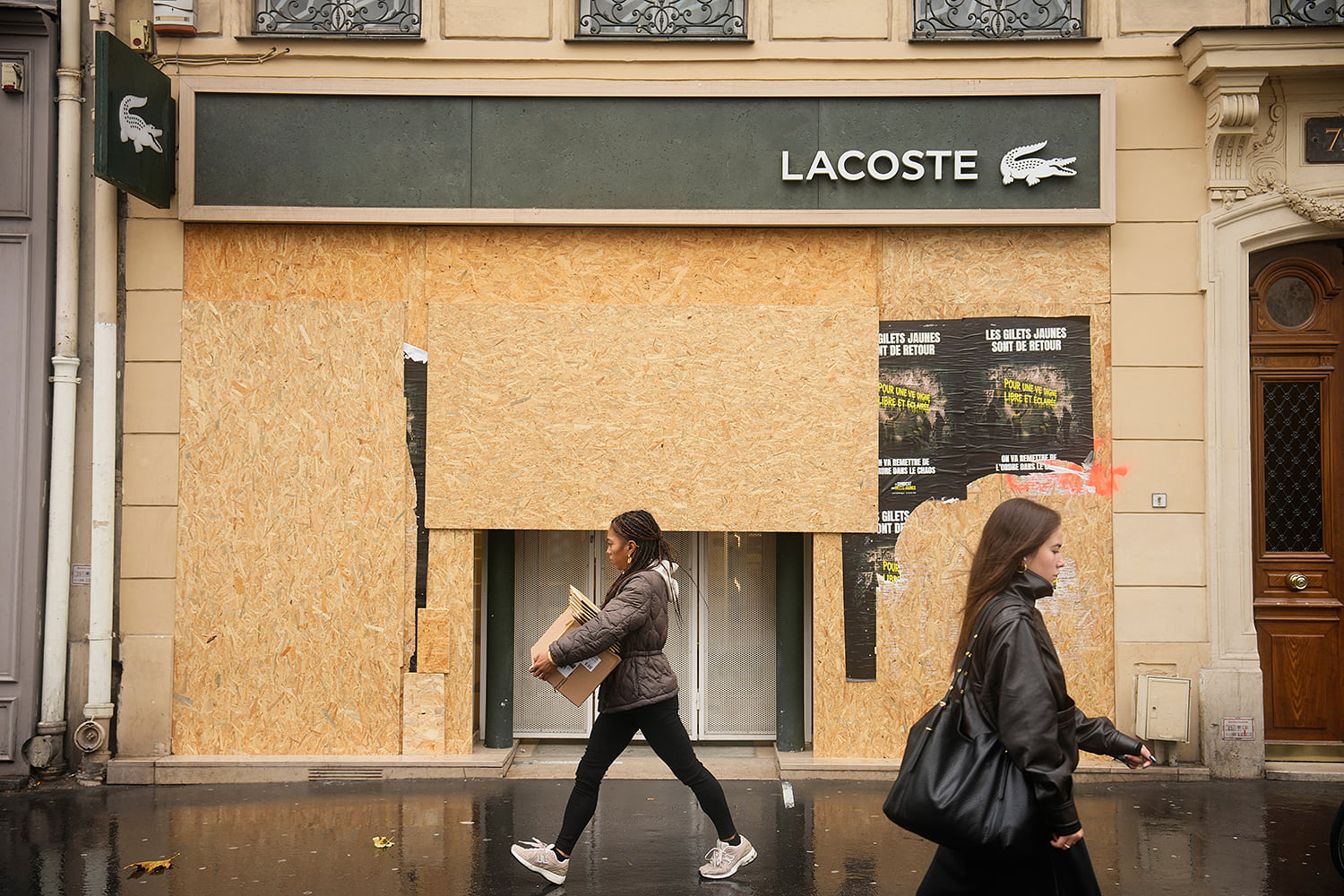
As many as 70,000 police officers have been mobilized nationwide, equipped with helicopters and armored vehicles, to prevent further violence following a previous weekend of looting and destruction that left over 3,000 shops damaged. The situation has prompted shopkeepers to board up their businesses, reflecting the growing anxiety surrounding public safety during these demonstrations.
Amidst these tensions, Macron’s administration faces mounting pressure to address the grievances of students and workers, who are calling for substantial reforms to the education system and financial support for rising living costs. As protests continue to unfold, the government’s response will be critical in shaping the future of public sentiment and stability in France.
Photo credit: Teresa Suarez