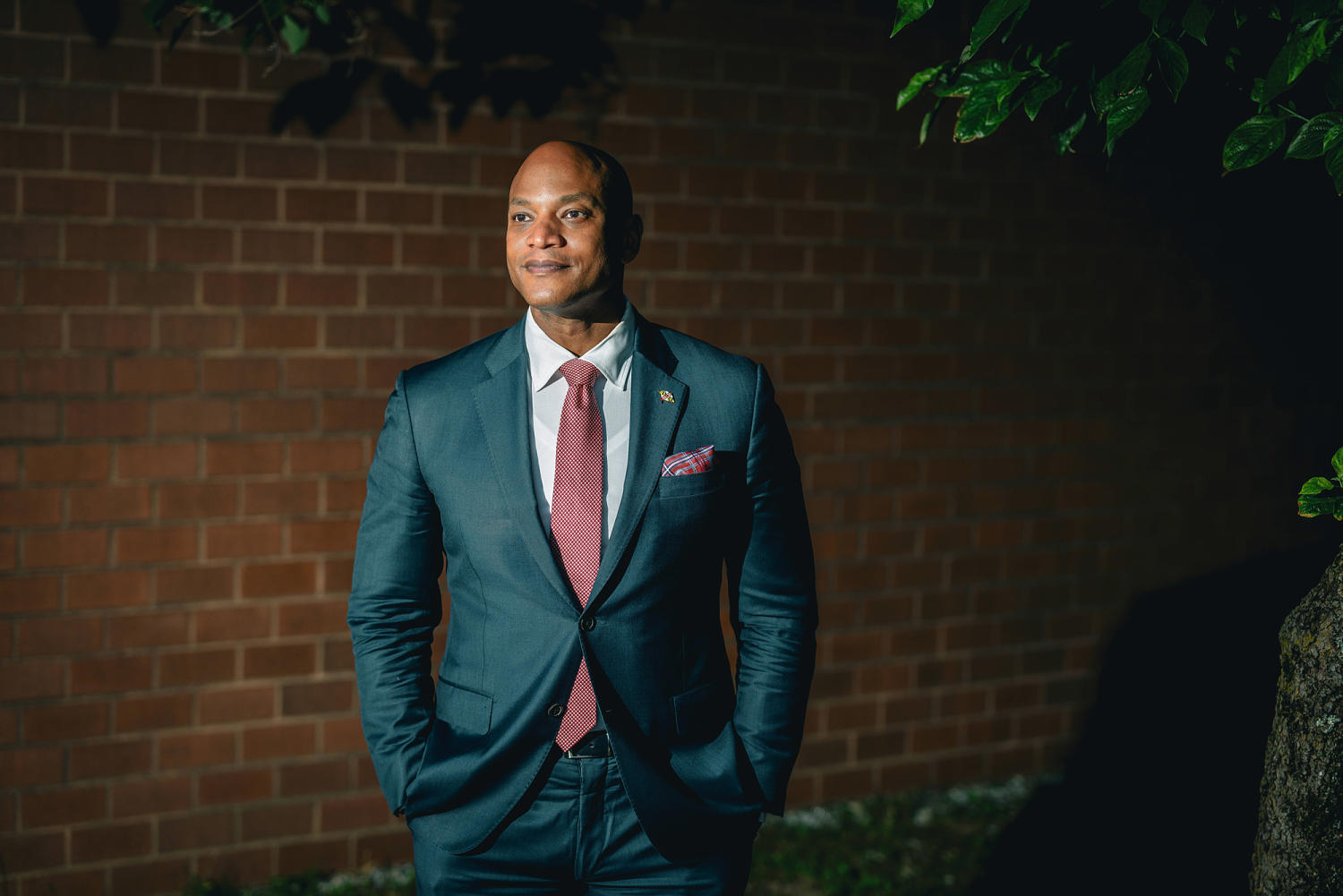
As Maryland gears up for its pivotal election next week, Governor Wes Moore is not just focused on his re-election bid; he is also deeply engaged in a significant ballot measure that could reshape the state’s congressional map. This initiative, if approved by voters, would empower Democratic leaders to redraw district lines in a manner that could enhance their political advantage, potentially altering the current 7-1 Democratic to Republican ratio.
Despite the Democratic stronghold in Maryland, recent polling indicates that support for this measure may be wavering. A University of Maryland, Baltimore County survey revealed that 53% of likely voters are inclined to oppose the measure, including a surprising portion of Democrats. In response, Moore’s campaign has shifted its advertising strategy, diverting funds from his re-election efforts to promote the ballot question, a move that underscores the urgency of the situation.
Endorsements from high-profile figures like former President Barack Obama have framed the ballot measure as a crucial step in countering Republican influence, particularly in the wake of Donald Trump’s presidency. However, as the election date approaches, concerns are rising within Democratic circles. If the measure fails, it could represent a significant blow to Moore’s political ambitions, especially as speculation mounts regarding his potential candidacy for the 2028 presidential election.
In the broader context of this election cycle, advertising spending has reached unprecedented heights, with over $11.21 billion already committed. This midterm election is on track to outpace previous presidential cycles, indicating a fierce battle for control in Congress. As candidates across the nation vie for attention and resources, Moore’s situation in Maryland presents a microcosm of the larger political landscape, where every vote counts and the stakes are extraordinarily high.
Photo credit: Tierney L. Cross for The Washington Post via Getty