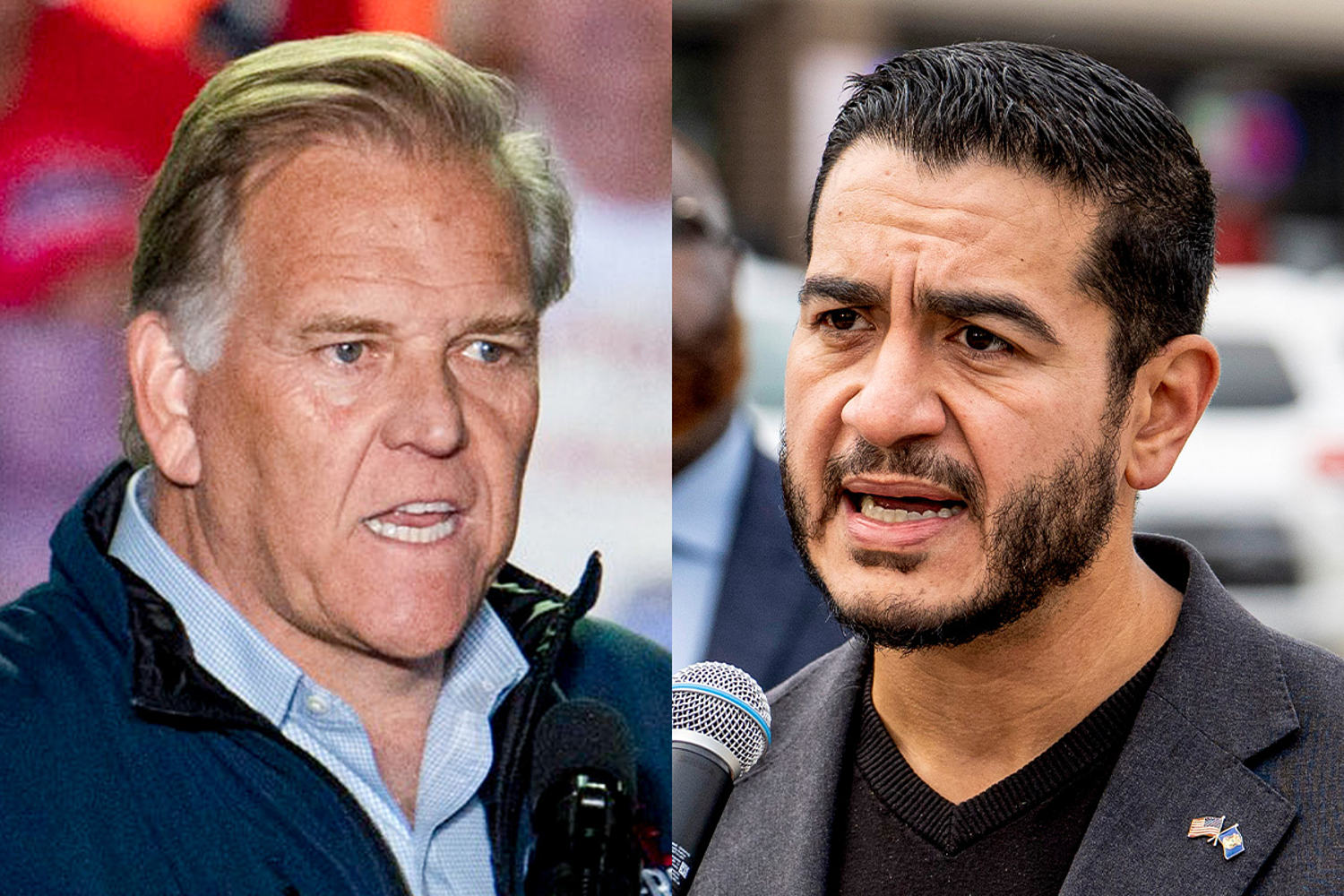
In a heated exchange during the first Michigan Senate debate, Democrat Abdul El-Sayed and Republican Mike Rogers clashed over a series of pressing issues, including the ongoing war in Iran, soaring gas prices, and trade tariffs. The debate, held in Grand Rapids, highlighted the tension and animosity between the two candidates as they navigated this crucial race for the Senate seat being vacated by Gary Peters.
El-Sayed aimed to frame Rogers as an opportunistic supporter of former President Donald Trump, accusing him of flip-flopping on key issues to salvage his political career. “Rogers has cheer-led a Canadian tariff policy that costs Michigan families an estimated $5,600 a year,” El-Sayed asserted, pointing to what he described as Rogers’ inconsistency and political cowardice.
On the other hand, Rogers labeled El-Sayed a “con man,” claiming that his promises were unrealistic and would inevitably lead to tax increases. The candidates exchanged barbs over their personal real estate holdings, with Rogers mentioning El-Sayed’s wife’s property in the UAE and his own Florida residence, a topic that drew eye-rolls from the audience.
As the debate progressed, moderator Rick Albin found himself intervening at times to remind the candidates to keep the discussion civil. “I’d like to be a part of the debate, too,” he quipped, highlighting the intensity of the exchanges.
This Senate race is drawing national attention, as both parties view it as a critical battleground that could sway control of the Senate. Following a contentious primary battle, El-Sayed emerged as the progressive choice, receiving endorsements from notable figures like Sen. Bernie Sanders and Rep. Alexandria Ocasio-Cortez, while Rogers hopes to reclaim a seat for the Republicans, who have not held it since 1994.
Addressing the war in Iran and its impact on gas prices, both candidates agreed on the need for a federal gas tax pause but quickly diverged in their analyses of the conflict. El-Sayed criticized Rogers for his previous support for military action, while Rogers attempted to pivot back to El-Sayed’s policy proposals, particularly “Medicare for All,” which he argued would raise taxes and disrupt existing healthcare plans.
The dynamic between the candidates was palpable, as they both resorted to personal attacks—El-Sayed deriding Rogers’ lack of integrity and Rogers accusing El-Sayed of selling a deceptive narrative. The debate served not only to illuminate their policy differences but also showcased their contrasting styles as they prepare for what promises to be a fiercely contested election.
As the conversation turned to immigration policies, both candidates expressed differing views on the Trump administration’s approaches. Rogers criticized recent ICE operations, suggesting they could have been conducted with more discretion, while El-Sayed reiterated his call for abolishing ICE altogether.
With the debate setting the stage for their upcoming encounters, both candidates are gearing up for a campaign that is sure to be just as contentious as this initial confrontation.
Photo credit: USA Today Network; Reuters; Getty Images