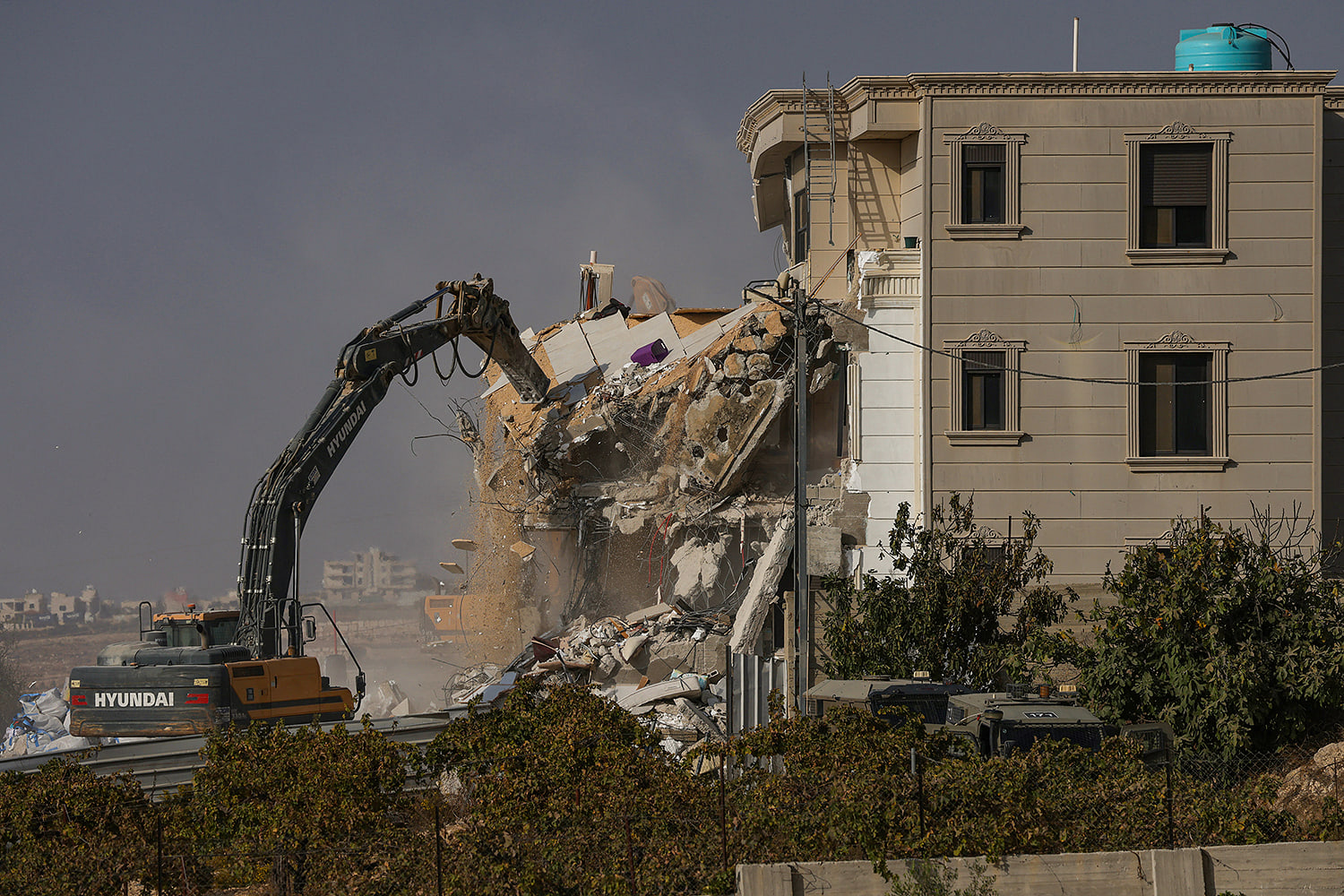
In a dramatic escalation of tensions in the occupied West Bank, Israeli forces demolished the home of Palestinian businessman Riyad Mureish in Hebron on Friday. This action is part of a broader crackdown that Palestinian officials are condemning as politically motivated collective punishment following a recent shooting incident.
Mureish, who invested his life savings into the property, recounted the harrowing experience as Israeli soldiers gave his family mere minutes to gather their belongings before forcibly evicting them. He expressed his disbelief, stating, “No house, no land, no money, what can I do?”
The demolition occurred amidst a backdrop of heightened military activity in Hebron, coinciding with Israeli Prime Minister Benjamin Netanyahu’s promise to increase operations across the region. Following a shooting that resulted in the deaths of two Israeli soldiers, Netanyahu declared the military would conduct house-to-house searches in neighborhoods associated with the attackers.
The mayor of Hebron, Yousef al-Jabari, reported that Israeli forces have effectively besieged the city, sealing off entrances and forcing the closure of key services, including a local mosque. He criticized the lockdown as a collective punishment scheme, suggesting it serves Netanyahu’s political ambitions just days before the upcoming election.
Reports indicate that approximately 240 Palestinian families were displaced in the Jildah and ‘Ein Deir Bahah neighborhoods as soldiers took over homes, raising Israeli flags over several buildings. The Israeli human rights organization B’Tselem condemned these actions, highlighting the ongoing violence and intimidation faced by Palestinian residents.
The situation has drawn international concern, with UN representatives calling for an end to measures that severely restrict Palestinians’ rights and freedoms. As Netanyahu faces pressure from right-wing factions within his government to adopt a hardline stance, analysts suggest the current military actions may be a tactic to solidify support ahead of the election.
Despite the increasing violence, experts predict that even a change in leadership post-election may not alter the fundamental dynamics of the Israeli-Palestinian conflict. The situation in Hebron continues to evolve, raising urgent questions about the humanitarian implications for the local population.
Photo credit: Hazem Bader