
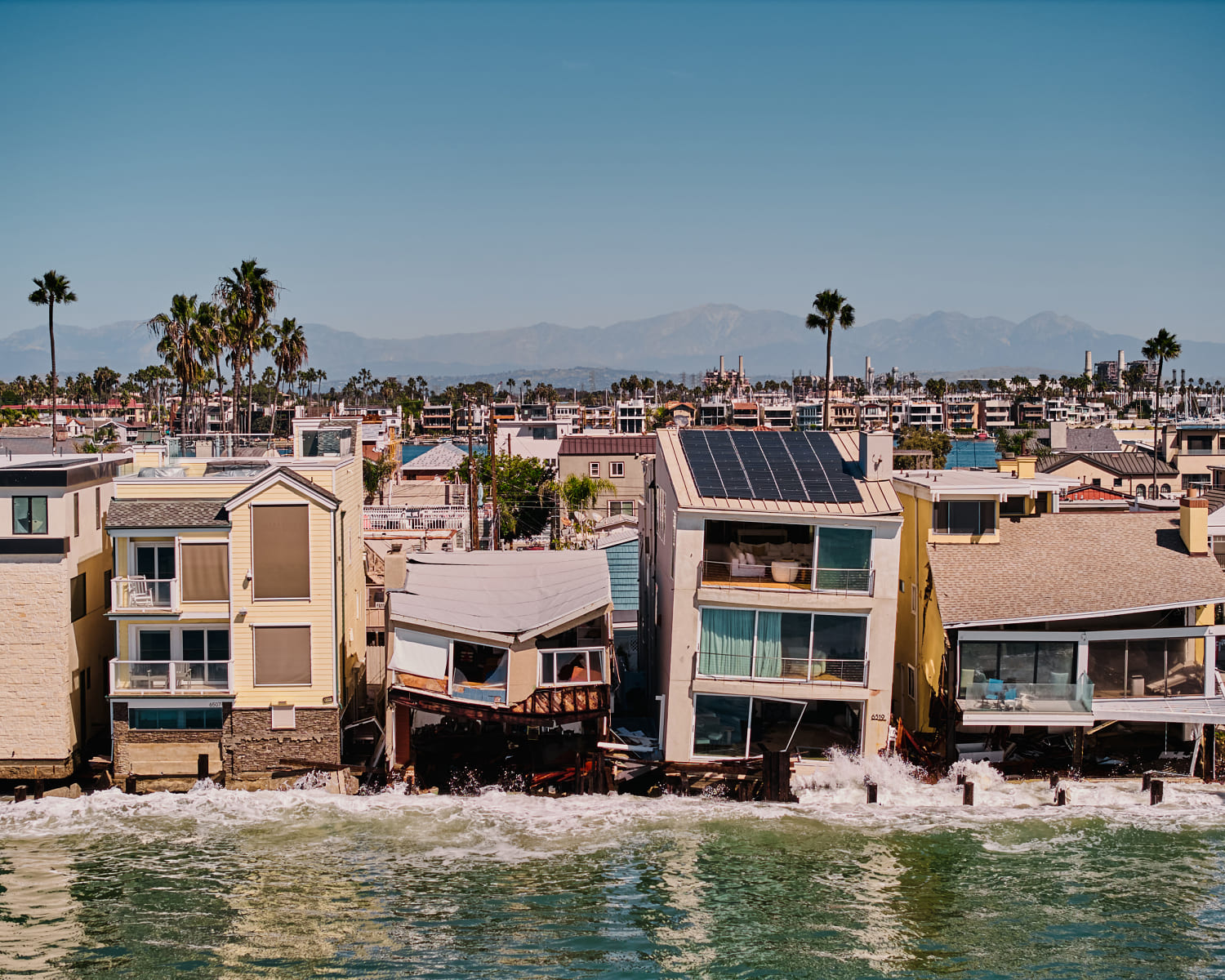
Residents of Long Beach, California, are facing an alarming reality as their homes succumb to the relentless forces of nature. Just weeks ago, Shawn Curtis awoke to discover his beachfront apartment teetering precariously on the edge of the ocean, with waves crashing up to his second-floor windows. “The doorframe was crooked, the window was crooked, and then I saw a big wave crash,” he recounted, reflecting on the chaos that ensued.
This dramatic scene unfolded in the early hours of October 9, as an unprecedented combination of storm surges and record-setting king tides wreaked havoc along the Southern California coast. The aftermath has devastated the once idyllic landscape: sandy beaches have vanished, boardwalks have been obliterated, and homes have been inundated with seawater.
As residents like Curtis are forced to flee their homes, experts warn that the worst is yet to come. The anticipated peak of this year’s El Niño is still months away, and the fragility of California’s coastline is under severe scrutiny. “This is just a little bit of a taste of what we will see in the future,” cautioned Timu Gallien from UCLA’s Coastal Flood Lab.
The relentless surf has already claimed numerous structures, with coastal communities from Malibu to San Diego experiencing severe flooding and beach erosion. In Long Beach alone, over a dozen homes have been swallowed by the ocean, highlighting the urgent need for infrastructure that can withstand the rapidly changing climate.
Residents are left grappling with the profound implications of climate change on their lives. Dana Marie Lazzareschi, a Long Beach Peninsula resident, expressed her dismay, stating, “I definitely wouldn’t buy a home here now. It really is such a dream, but how long can we stay?” As the community faces an uncertain future, the question looms: what measures can be taken to protect these vulnerable coastal areas from the impending threats posed by nature?
Photo credit: Adam Amengual for NBC News