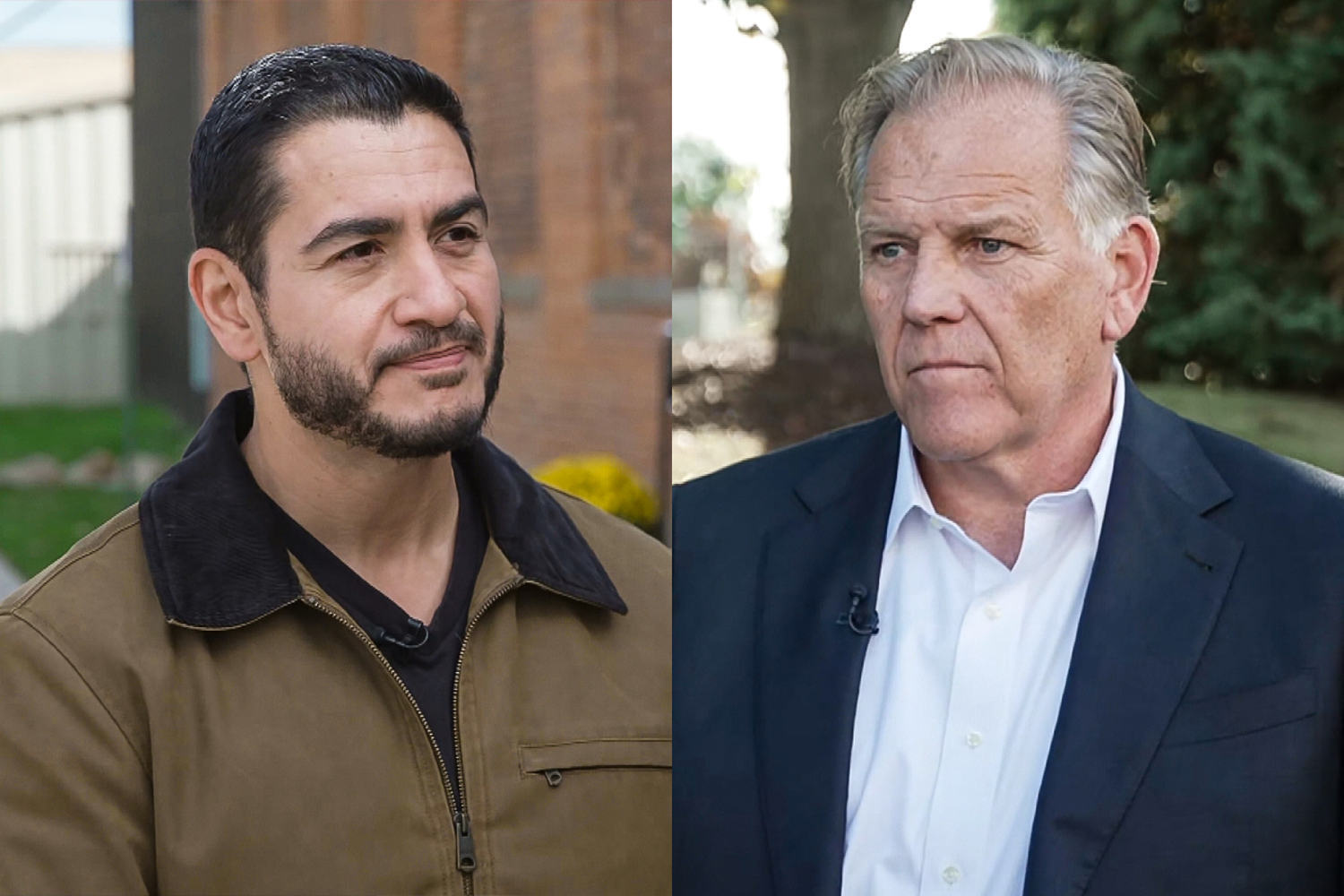
In the final debate of the Michigan Senate race, Democratic nominee Abdul El-Sayed and former Republican Rep. Mike Rogers faced off in a contest that shifted from the fiery exchanges of their previous encounter to a more subdued exchange focused on trustworthiness. With Election Day looming just two weeks away, both candidates aimed to solidify their positions in a tightly contested race to replace retiring Sen. Gary Peters.
Taking place in Detroit, the debate saw El-Sayed leveraging his criticisms of Rogers by attempting to tie him closely to former President Donald Trump, suggesting that Rogers represented corporate interests over those of Michigan residents. “We need a War Powers resolution rather than a senator who is going to stand hip to hip with Donald Trump on this war that made no sense when it started and certainly makes no sense now,” El-Sayed declared, referencing rising costs tied to ongoing military conflicts.
Rogers, on the other hand, has been making efforts to distance himself from Trump, particularly regarding foreign policy stances. Despite cutting an ad advocating for a reduction in the war effort, he maintained a nuanced view on Trump’s initial military actions. “I don’t think so,” he stated when asked if Trump made a mistake in launching the war in Iran, while simultaneously trying to frame himself as someone who could advocate for Michigan’s interests in the Senate.
As the debate unfolded, Rogers sought to question El-Sayed’s credibility and connections, particularly relating to accusations involving the Muslim Brotherhood, which El-Sayed has vehemently denied. The exchange reached a peak when El-Sayed confronted Rogers over questioning his loyalty to the Constitution, asserting, “To bring into question my commitment to the Constitution is really beneath you.”
Throughout the debate, topics such as healthcare, immigration, and tariffs were addressed, with the moderators ensuring a structured discussion. On tariffs, Rogers acknowledged the need for reconsidering some of Trump’s policies, signaling a potential shift in approach that could resonate with Michigan voters affected by trade issues.
El-Sayed’s strategy included a playful jab at Rogers, suggesting that supporters could play a “MAGA bingo” game as they watched the debate, filling in spaces based on Rogers’ predictable responses. This light-hearted approach contrasted with Rogers’ insistence that El-Sayed was overly focused on Trump, arguing that the real issue at hand was the future direction of Michigan.
As the debate concluded, both candidates laid out their visions for emerging technologies such as artificial intelligence, with Rogers expressing support for regulatory measures while El-Sayed called for a moratorium on certain AI research to protect jobs. With voters closely watching the developments, the stakes are higher than ever as Michiganders prepare to head to the polls.
Photo credit: NBC News