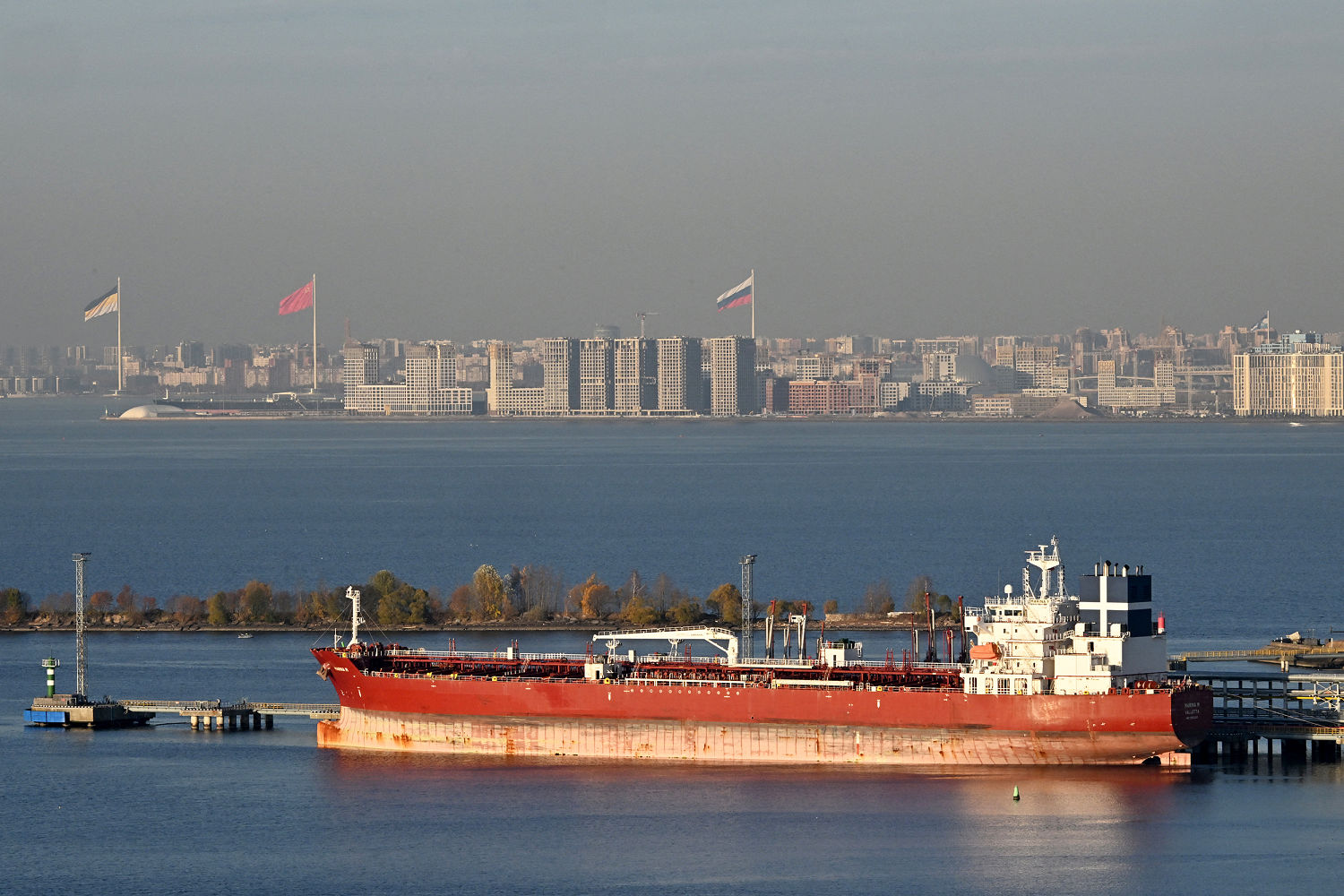
A Russian tanker carrying diesel fuel has embarked on a journey to the United States, marking a significant moment as it is the first shipment since former President Donald Trump reached an agreement with Russian President Vladimir Putin to increase fuel supplies in the global market. This departure, confirmed by the Kremlin, comes at a time when U.S. diesel prices have surged dramatically, raising concerns among consumers and policymakers alike.
The tanker, named “Agioi Fanendes” and registered under Malta’s flag, set sail from Primorsk, a port in Russia, with its destination listed as New York. It is anticipated to arrive on November 10, just after the crucial midterm elections. Trump’s recent easing of sanctions on Russia, which began two weeks prior, has been viewed as a strategic move to alleviate rising fuel costs that could impact electoral outcomes.
According to Energy Aspects, a market intelligence firm, the tanker is transporting approximately 298,000 barrels of diesel. However, industry analysts suggest that the arrival of this shipment may have a limited effect on price stabilization, given that U.S. diesel demand currently hovers around 3.8 million barrels per day.
The political implications of this shipment are significant, as Trump’s administration faces pressure to control rising fuel prices that have escalated due to supply chain disruptions linked to the conflicts in Iran and Ukraine. Despite various measures taken by the administration to boost diesel supplies, experts indicate that these efforts may fall short in providing long-term relief for American consumers.
As the U.S. grapples with an unprecedented 78% increase in diesel prices this year, the ramifications of this shipment extend beyond just fuel costs, affecting everything from food prices to transportation. The geopolitical landscape continues to complicate matters, with analysts warning that disruptions in oil supply chains are likely to persist, further constraining fuel availability.
In summary, while the shipment of Russian diesel to the U.S. represents a noteworthy shift in energy policy, the overall impact on prices remains uncertain, and the political landscape surrounding energy costs is set to play a pivotal role in the upcoming elections.
Photo credit: Olga Maltseva