
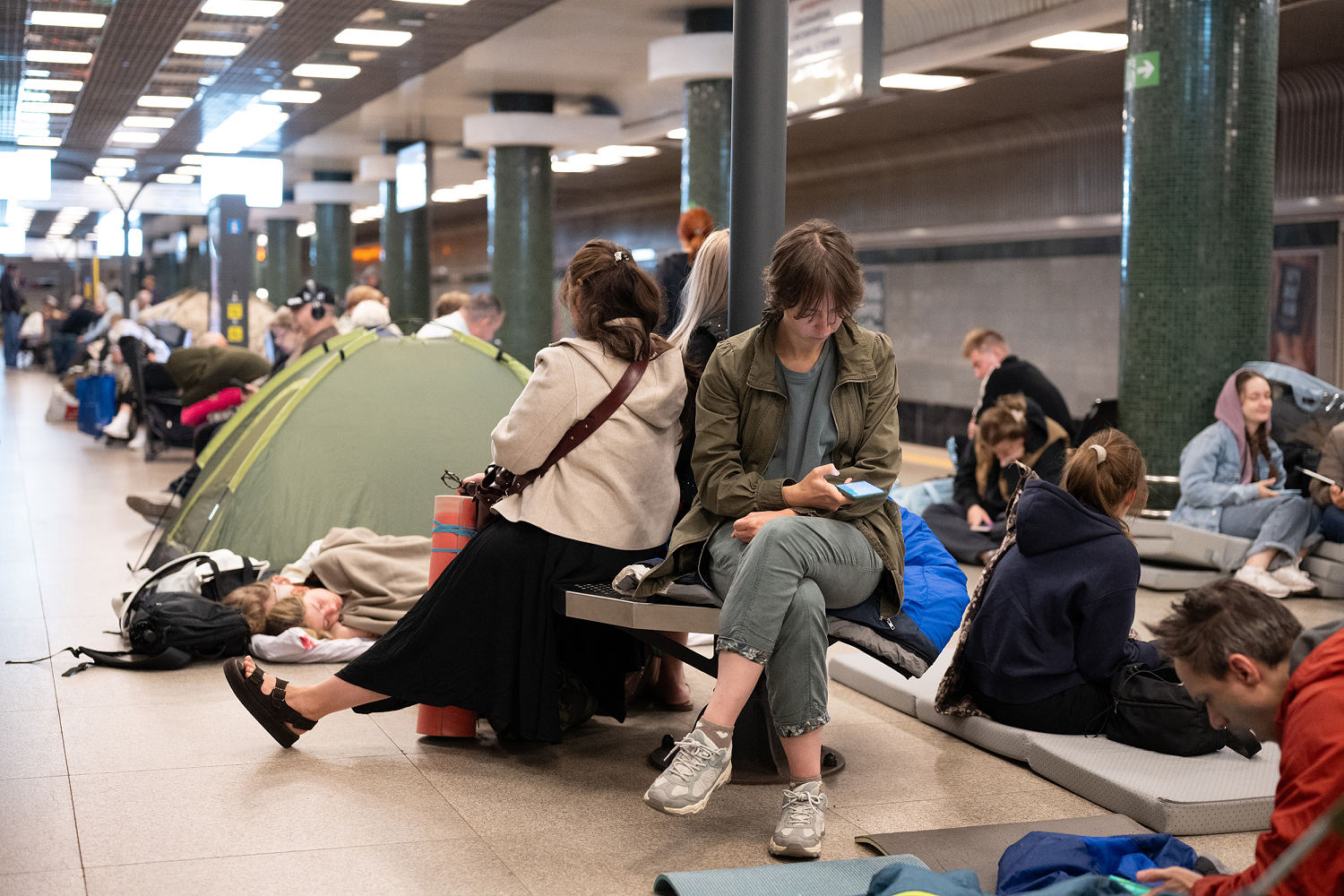
On a tense night in Ukraine, citizens were confronted with alarming notifications from their emergency alert systems, falsely warning of nuclear threats and chemical hazards. These alerts, which turned out to be part of a cyberattack, sent shockwaves through a population already accustomed to the dangers of war.
As accusations of hacking flew between Ukraine and Russia, both nations pointed fingers at each other’s emergency alert applications. Hours after these notifications surfaced, a humanitarian ceasefire between the two sides concluded, stirring concerns of renewed violence.
The alerts, issued late Sunday, instructed residents to stay indoors due to purported radiation and street violence. In an ironic twist, one message claimed that all of Ukraine was on nuclear alert, humorously assuring the public that “Oreshnik is in action,” referencing Russia’s hypersonic missile capability. However, the Ukrainian Air Force soon confirmed that the alerts were unauthorized and urged calm among the populace.
Despite the ominous warnings, many Ukrainians reacted with skepticism, sharing memes online that mocked the situation, reflecting a community that has learned to cope with the absurdities of their ongoing conflict. The State Emergency Service reassured the public that the national alert system was operating normally, while reports indicated that the alerts had also disrupted public sirens in some regions.
Simultaneously, Russia’s emergency services reported a similar cyber incident, claiming their app had been compromised and that false information was disseminated. The aftermath left both countries questioning the integrity of their communication systems, although no specific group has been identified as responsible for the cyberattacks.
The backdrop of this digital chaos was a fragile ceasefire that had allowed for humanitarian efforts and the evacuation of civilians from conflict zones. As both nations grapple with the aftermath of this incident, it remains to be seen whether the cyber disruptions will escalate tensions or prompt a reevaluation of their digital security measures.
Photo credit: Danylo Antoniuk