
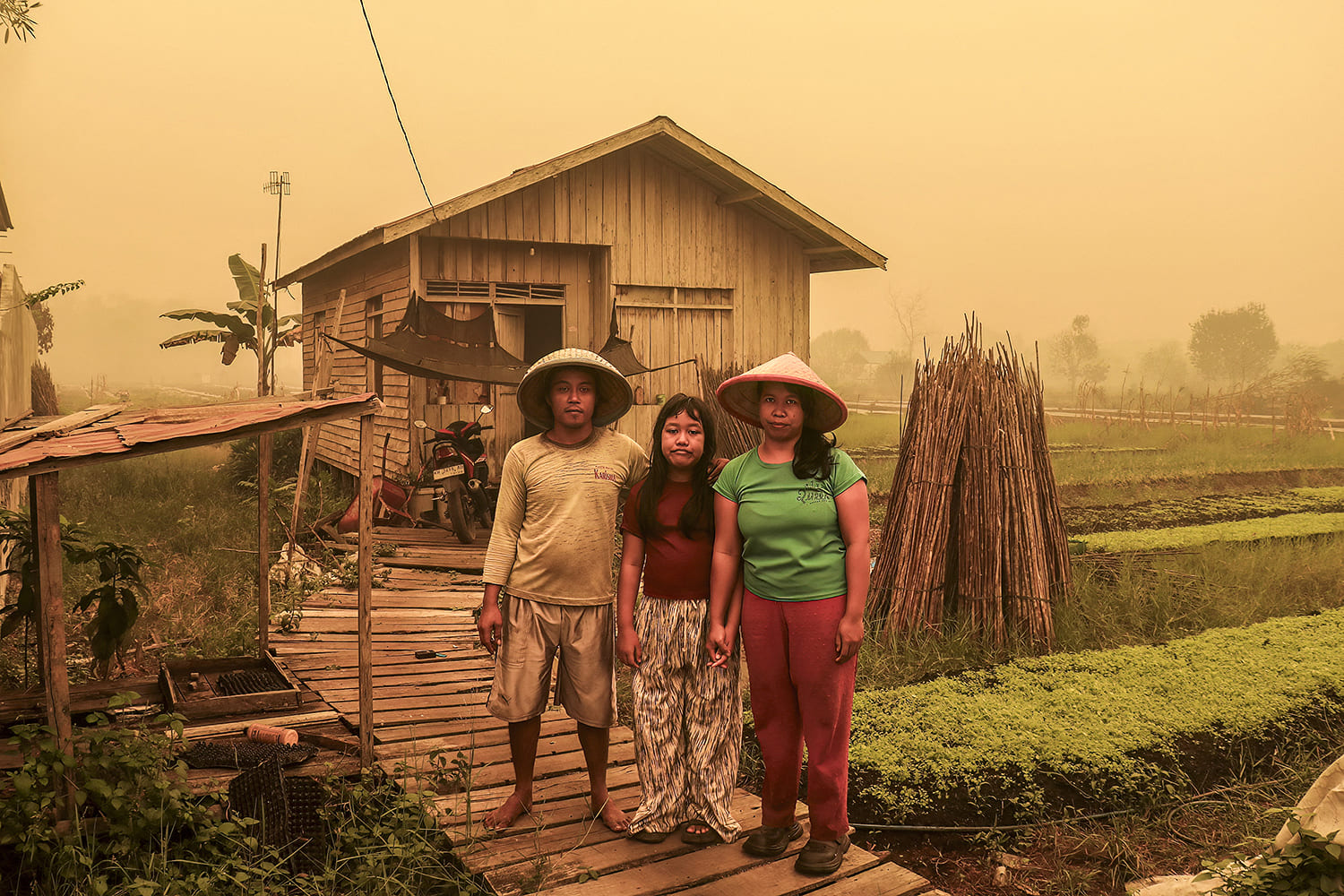
The skies over Indonesia have taken on an eerie hue, reminiscent of Mars, as wildfires continue to ravage the region. The toxic haze, which has persisted since July, has led to a significant health crisis and widespread protests across Southeast Asia. Millions are grappling with the effects of the smoke, which has forced schools to close and generated heated debates about accountability.
Natanael Undas, a schoolteacher from central Kalimantan province, described the situation as apocalyptic. “It looks like Mars, like we’re living on another planet,” he lamented, noting that his family keeps their windows shut to minimize exposure to the smoke, yet it still seeps indoors, exacerbating respiratory issues, especially for his young daughter.
This year’s wildfires in Indonesia are particularly severe, driven by a combination of traditional land-clearing practices and the extreme weather conditions associated with a “super” El Niño event. As a result, the current fire season is the worst in over a decade, according to experts and residents alike.
Protests erupted in Jakarta and other cities as citizens expressed their frustration with President Prabowo Subianto’s administration for its perceived inaction. Among the demonstrators, Natasha Ruvantina demanded independent investigations into the fires and a comprehensive strategy for long-term prevention.
In response, the Indonesian government acknowledged the public’s concerns, asserting its intention to prosecute companies tied to the fires. Neighboring countries, particularly Singapore, are also feeling the impact as air pollution levels climb, with officials there threatening legal action against firms implicated in the land-burning practices.
Reports from the Indonesian environmental group Walhi have identified numerous companies linked to the fires, including several based in Singapore and Malaysia. The Indonesian authorities have since pinpointed 20 corporations under investigation, adding to the mounting pressure to address the crisis.
As the haze continues to disrupt daily life, even outdoor activities have become limited. In Singapore, the haze affected the Formula One night race, obscuring the skyline and prompting public health concerns. Local residents have expressed distress over the resurgence of respiratory ailments, attributed to the hazardous air quality resulting from the fires.
Despite the government’s efforts, the fires are expected to persist into November due to a delayed rainy season. However, recent rainfall has provided a glimmer of hope, with some residents celebrating the return of clearer skies. “Finally, the rain comes,” said Undas, reflecting a collective sigh of relief amidst ongoing struggles against the relentless haze.
Photo credit: Reina