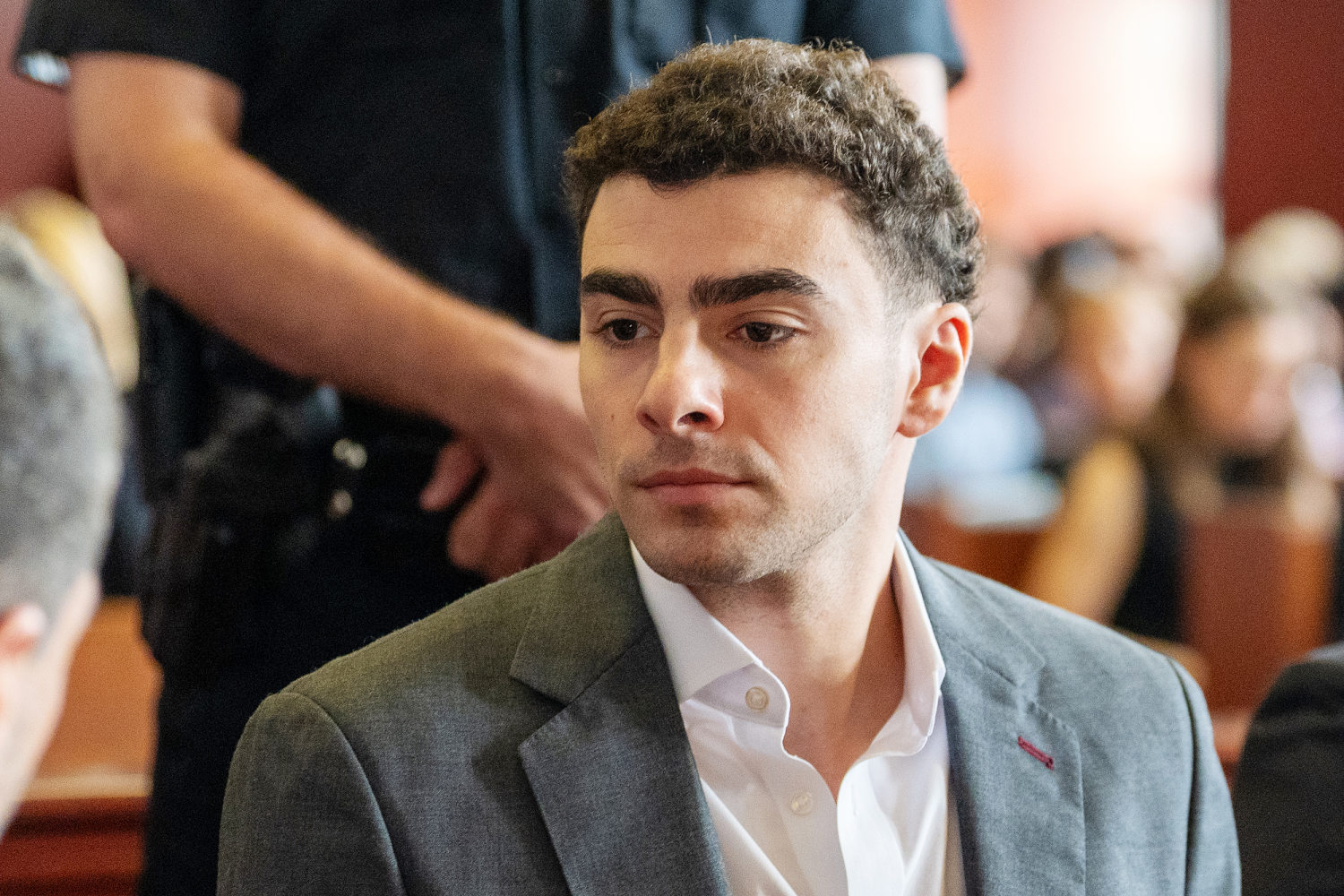
In a significant legal battle, attorneys for Luigi Mangione are advocating for the dismissal of his state murder and weapons charges, asserting that his recent guilty plea to federal stalking charges should prevent further prosecution. This argument was presented in court on Friday, as they maintain that the principles of double jeopardy shield him from being tried again for the same offenses.
Mangione, who confessed to killing UnitedHealthcare CEO Brian Thompson, entered a guilty plea in August in federal court, which has since ignited a complex dispute over his separate state court trial for second-degree murder and weapons possession. His state trial was originally scheduled for September 18 but has been indefinitely postponed while the court considers the implications of double jeopardy.
Prosecutors from the Manhattan District Attorney’s office contend that the state case can move forward, citing that the charges differ significantly from those in federal court, which revolved around stalking and related offenses. They argue that the nature of murder isn’t typically governed by federal statutes, thereby justifying the state prosecution.
However, Mangione’s defense team argues that the two cases share overlapping legal elements, highlighting that he was charged with the same weapon possession in both cases and that there is “no other gun” involved. The attorneys emphasize the similarities in the charges, pushing back against the state’s assertions of distinctiveness.
As the legal proceedings unfold, a decision regarding the dismissal motion is expected on December 10. If the case proceeds in state court, Mangione could face a maximum sentence of 25 years to life, while in federal court, he could potentially receive a life sentence when he returns on December 18.
The case, which has garnered substantial media attention, raises questions about the limits of legal jurisdiction and the interpretation of double jeopardy laws in New York. Mangione’s lawyers argue that the combined efforts of state and federal prosecutors could reflect an overreach, suggesting that the high-profile nature of the case has led to a dual pursuit for the same incident.
Photo credit: David Dee Delgado